
Left Atrial Appendage Occlusion
Left Atrial Appendage (LAA) and Occlusion
Understanding the Connection Between Atrial Fibrillation and Stroke Risk
The left atrial appendage (LAA) is a small, pouch-like structure located in the upper left chamber of the heart. While it normally plays a limited role in heart function, it can become an important concern for people with atrial fibrillation (AFib).
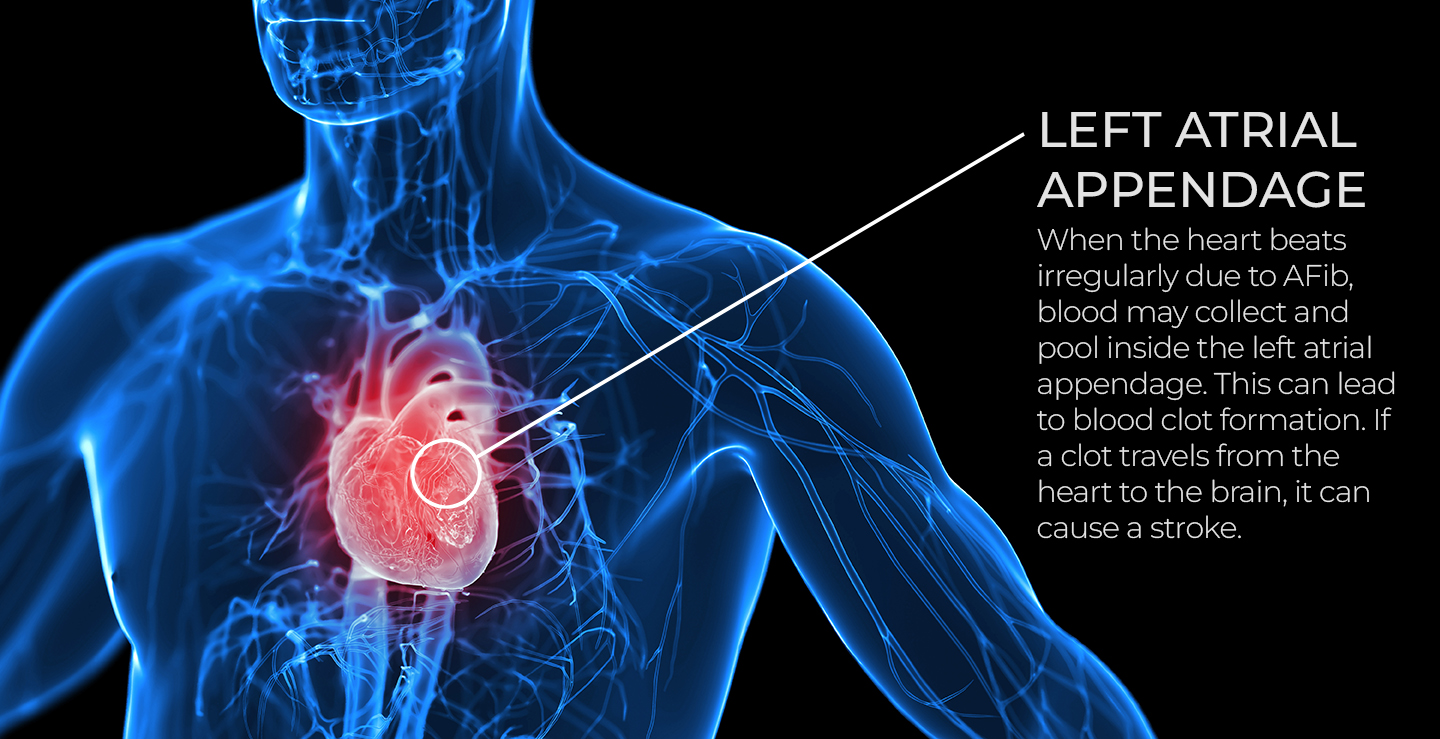
When the heart beats irregularly due to AFib, blood may collect and pool inside the left atrial appendage. This can lead to blood clot formation. If a clot travels from the heart to the brain, it can cause a stroke.
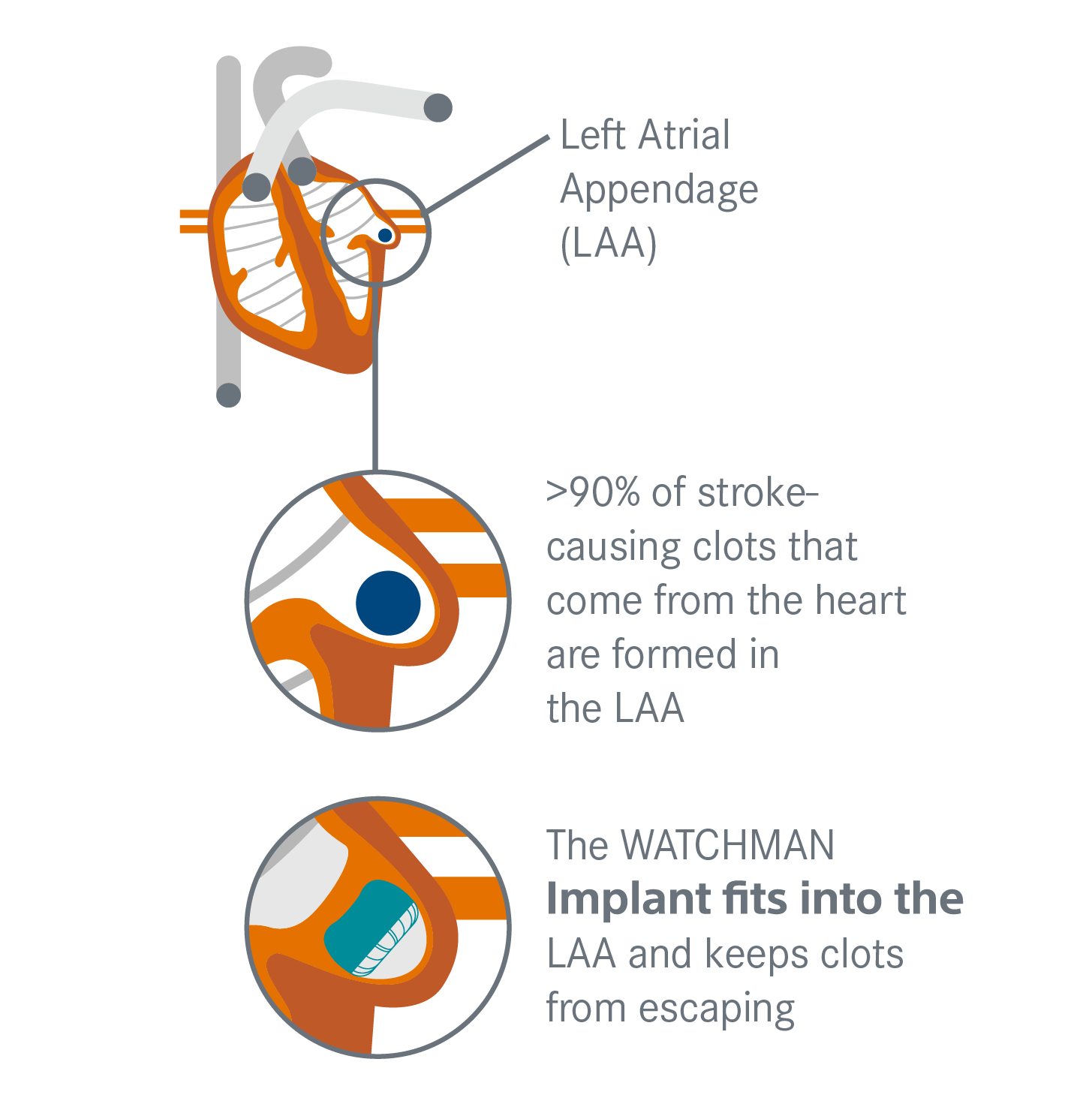
In fact, the left atrial appendage is where most stroke-causing blood clots associated with non-valvular atrial fibrillation originate.
Is Stroke Risk Managed in Patients with AFib?
For many people with atrial fibrillation, oral anticoagulants (blood thinners) are prescribed to reduce the risk of blood clots and stroke. Common medications include Eliquis®, Xarelto®, Pradaxa®, and warfarin (Coumadin®).
While these medications can be effective, they are not ideal for everyone. Some patients experience bleeding complications, have an increased risk of bleeding, or have difficulty tolerating long-term anticoagulant therapy.
For appropriately selected patients, Left Atrial Appendage Occlusion (LAAO) offers an alternative approach to stroke prevention without the need for long-term oral anticoagulants.
What Is Left Atrial Appendage Occlusion (LAAO)?
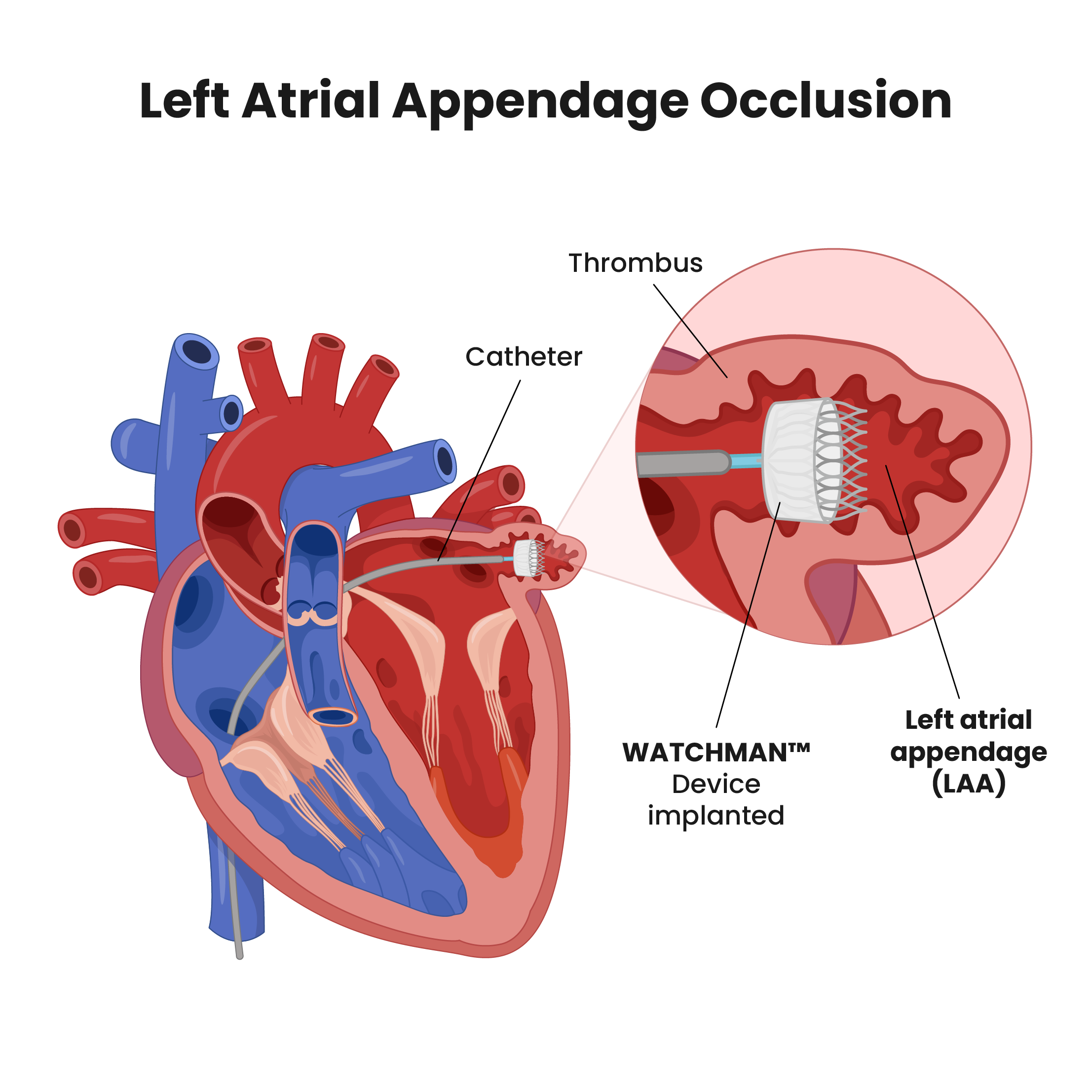
Left atrial appendage occlusion is a minimally invasive procedure that seals off the left atrial appendage to prevent blood clots from escaping into the bloodstream and potentially causing a stroke.
At ReVaMP Heart & Vascular Institute, this procedure may be performed using the WATCHMAN™ device, a small implant designed to permanently close off the opening of the left atrial appendage.
Once implanted, the device acts as a barrier to blood clots. Over time, the body’s own tissue grows over the device, creating a permanent seal.
For many eligible patients, the WATCHMAN procedure provides an alternative to taking oral anticoagulants long term.
Potential Benefits of the WATCHMAN Device
- Helps reduce the risk of stroke associated with non-valvular atrial fibrillation.
- Provides an alternative to long-term oral anticoagulant medication for appropriate
- May reduce exposure to the bleeding risks associated with long-term blood thinner use.
- Requires a minimally invasive, one-time implant procedure.
- Does not require open-heart surgery.
The WATCHMAN device does not cure atrial fibrillation or eliminate all stroke risk. Your physician will determine whether it is an appropriate option based on your individual health needs.
Who May Be a Candidate for Left Atrial Appendage Occlusion?
Several factors can increase LDL levels, which is driven by a combination of LAAO may be an option for people with non-valvular atrial fibrillation who have an increased risk of stroke and would benefit from an alternative to long-term anticoagulation.
You may be a candidate if you:
- Have been diagnosed with atrial fibrillation and have an increased risk of stroke.
- Have experienced bleeding complications while taking blood thinners.
- Have a medical condition that increases your risk of bleeding.
- Have difficulty tolerating or maintaining long-term anticoagulant therapy.
- Want to explore an alternative to long-term blood thinner use after discussing the risks and benefits.
Not everyone with atrial fibrillation is a candidate. A comprehensive evaluation, including an assessment of your stroke risk, bleeding risk, heart anatomy, and overall health, is necessary to determine whether the procedure is right for you.
What to Expect During the WATCHMAN Procedure
The WATCHMAN implant procedure is minimally invasive and does not require open-heart surgery.
Before the procedure, your physician will evaluate your heart and determine the size and structure of your left atrial appendage. Imaging tests, such as a transesophageal echocardiogram (TEE) or cardiac CT, may be used to help plan the procedure.
The procedure is performed under general anesthesia. A small incision is made in the upper leg and inserts a thin, flexible tube (catheter) into a blood vessel.
Using advanced imaging guidance, the catheter is carefully directed through the blood vessels into the heart. The WATCHMAN device is then positioned at the opening of the left atrial appendage to seal it off.
After the device is implanted, the catheter is removed and the small incision is closed. Most patients stay in the hospital overnight or less and return home the following day, depending on their recovery and physician recommendations.
Follow-up imaging is performed to confirm that the device is properly positioned, and the appendage is adequately sealed.
Patients typically need a short-term medication regimen following the procedure to help prevent blood clots while the heart tissue heals over the device. Once the physician confirms appropriate closure, many patients can discontinue their oral anticoagulant medication.
Your physician will provide specific instructions about medications and follow-up appointments. Never stop taking prescribed blood thinners without medical guidance.
Frequently Asked Questions About Left Atrial Appendage Occlusion
The left atrial appendage is a small, pouch-like structure in the upper left chamber of the heart. In people with atrial fibrillation, blood can pool in this area, increasing the likelihood of blood clot formation and stroke.
Left atrial appendage occlusion is a minimally invasive procedure that seals off the left atrial appendage to prevent blood clots from traveling into the bloodstream. It can provide an alternative to long-term oral anticoagulants for appropriately selected patients with non-valvular atrial fibrillation.
The WATCHMAN device is a small, implantable device designed to permanently close off the left atrial appendage. Once implanted, it prevents blood clots from escaping into the bloodstream and helps reduce stroke risk in eligible patients with atrial fibrillation.
For many patients, the WATCHMAN device can eliminate the need for long-term oral anticoagulants. However, you will typically need short-term blood-thinning or antiplatelet medication after the procedure while the device becomes covered by your heart tissue.
Your physician will determine when it is safe to discontinue your anticoagulant medication based on follow-up imaging and your individual treatment plan. Do not stop or change your medication without your physician’s approval.
No. The WATCHMAN device does not treat or cure atrial fibrillation. It addresses stroke risk by closing off the left atrial appendage, where blood clots commonly form. You may still need medication or other treatments to manage your heart rhythm or heart rate.
The procedure may not be appropriate for patients with certain heart conditions, unsuitable left atrial appendage anatomy, active blood clots in the heart, or an inability to take the medications required during the healing period. ReVaMP Heart & Vascular Institute will evaluate your medical history and imaging results to determine whether you are a candidate.
No. The procedure is minimally invasive and performed through a catheter inserted into a blood vessel in the upper leg. There is no need to open the chest or stop the heart.
The procedure generally takes approximately one to two hours, although the exact time can vary depending on your anatomy and individual circumstances.
Most patients spend one night or less in the hospital and return home the following day. Your physician will provide instructions regarding activity restrictions, incision care, and when you can resume your normal activities.
As with any medical procedure, there are potential risks. These may include bleeding, infection, blood vessel injury, complications involving the heart, device-related blood clots, fluid around the heart, or stroke. Your physician will discuss the potential risks and benefits with you before recommending treatment.
Many patients continue taking aspirin after the initial healing period, even after discontinuing oral anticoagulants. Your long-term medication plan will depend on your individual medical history and your physician’s recommendations.
Coverage varies by insurance provider, medical necessity, and individual eligibility. Our team can help you understand the evaluation and insurance authorization process.
Living with atrial fibrillation doesn’t mean you have to rely on long-term blood thinners without exploring other options. Left atrial appendage occlusion with the WATCHMAN device may offer an effective alternative for appropriately selected patients.