SPECT in Modern Cardiac Stress Testing
The Role of SPECT in Modern Cardiac Stress Tests
As a diagnostic tool for cardiac disease, stress tests has long played a pivotal role. Not only can it help identify and diagnose coronary artery disease (CAD), but it can also help determine the underlying cause of chest pain, assess cardiac function after a heart attack, and help gauge an individual’s ability for physical exertions. Now, cardiologists are incorporating SPECT (single-photon emission computerized tomography) into modern cardiac stress imaging tests, to help them better assess their patients’ conditions.
What is a SPECT Scan of the Heart? SPECT, a CT Scan of the Heart
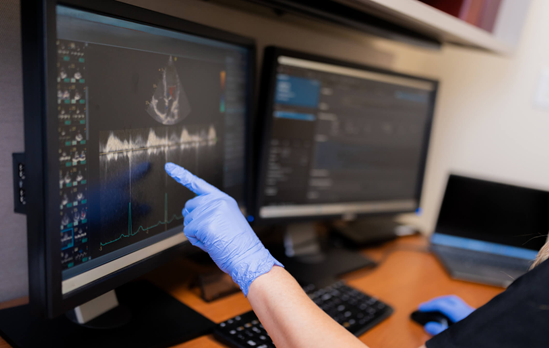
SPECT is a nuclear imaging test used to evaluate blood flow to the heart. It measures the flow during rest and stress, using a small amount of radioactive tracer and special cameras that create 3D images. The test goes by other names too, including nuclear stress test, myocardial perfusion imaging, and thallium or technetium stress test.
How SPECT Scan for the Heart Enhances Cardiac Imaging and Care
In a traditional stress test, stress is induced through exercise or medication, and the response is monitored for changes in heart rate, blood pressure, and electrocardiogram patterns. What makes the SPECT scan different is that it can provide much more detailed information, both visual and quantitative. Both tests can show abnormalities that are not necessarily apparent during rest, but the SPECT scan can offer much more intricate details about the heart’s blood supply and the viability of the heart muscle. It is a beneficial addition to cardiac stress tests, enhancing the results for better understanding of the best treatment plan for the patient.
SPECT Scan Heart Benefits
SPECT scans are recommended for many reasons. They’re good at detecting coronary artery disease (CAD) and evaluating chest pain, to determine whether the symptoms are caused by heart disease. SPECT can also be used after a heart attack, to assess the damage, and to monitor the progress of treatments or lifestyle changes. It’s an important tool for guiding doctors in their decisions about bypass surgery, stenting, and medications. SPECT scans has many benefits, including:
- The ability to detect CAD before symptoms become serious.
- A safe and non-invasive way to get an up-close look at the heart, with only an IV injection.
- SPECT can assess the severity and extent of heart disease, as well as calculating ejection fraction to assess heart function.
- Cardiologists can use SPECT to inform their decisions about treatment.
- It is useful after interventions, as well as following medication and lifestyle adjustments.
Future Outlook: SPECT Heart Scan and Hybrid Imaging
As technology advances, there will be further enhancements to diagnostic accuracy. SPECT is being researched continuously, to find ways to improve its sensitivity and specificity. With new developments in hybrid imaging, such as SPECT/CT systems, diagnostic accuracy continues to advance, making it possible to truly personalize treatment and improve patient outcomes.
FAQs
- Is a SPECT Scan Painful?
- No, except for possibly a minor discomfort of an IV needle.
- How Long Does a SPECT Cardiac Stress Test Take?
- Counting preparation, imaging, and wait times, it’s usually two to four hours. The actual exercise on a treadmill lasts only 7 to 15 minutes.
- Can a SPECT Scan Be Used to Find Heart Disease, even if There Are No Symptoms?
- Yes! That is one of the exciting benefits about SPECT: the ability to detect silent heart disease, so doctors can treat the disease before symptoms even appear.
- How Much Radiation is Involved in a SPECT Scan?
- It’s a very low dose, about the same as other nuclear medicine scans.
ReVaMP Heart and Vascular Institute Embraces Innovative Treatments like SPECT
At ReVaMP Heart and Vascular Institute we pride ourselves on offering advanced care options, including the use of highly accurate diagnostic tools. Our dedicated physicians specialize in treating a wide range of cardiovascular conditions, with leading-edge technologies, innovative procedures, and a patient-centered approach. Since 2021, we have been serving patients within the Philadelphia and Southern NJ regions, treating a wide range of cardiovascular conditions, with a focus on preventative and minimally invasive care. We provide the latest coronary, structural, peripheral arterial, and venous interventions that enhance our patients’ quality of life and renew their health and well-being. Using a tailored approach, we take the time to understand each patient and craft a treatment plan that meets the patient’s unique needs. For more information about our modern, patient-focused cardiovascular care, contact us through our website.