
Vascular Ultrasound: Essential Screening for High-Risk Groups
Vascular Ultrasound: Vascular Imaging Diagnostics for High-Risk Groups
Your vascular system does the work of moving your blood throughout your body, as well as ridding your body of damaged cells and excess fluids. When vascular diseases disrupt the function of your arteries, veins, and lymphatic system, the result can be life-threatening conditions like stroke, heart attack, or a ruptured aneurysm. Unfortunately, vascular disease is sometimes called the silent killer, as many people don’t notice any symptoms until their condition is serious. That’s why vascular screening is crucial. Using non-invasive tests, medical professionals can identify risks and save lives. Here, we take a closer look at the vascular ultrasound, a valuable screening tool.
What is Vascular Ultrasound Screening?
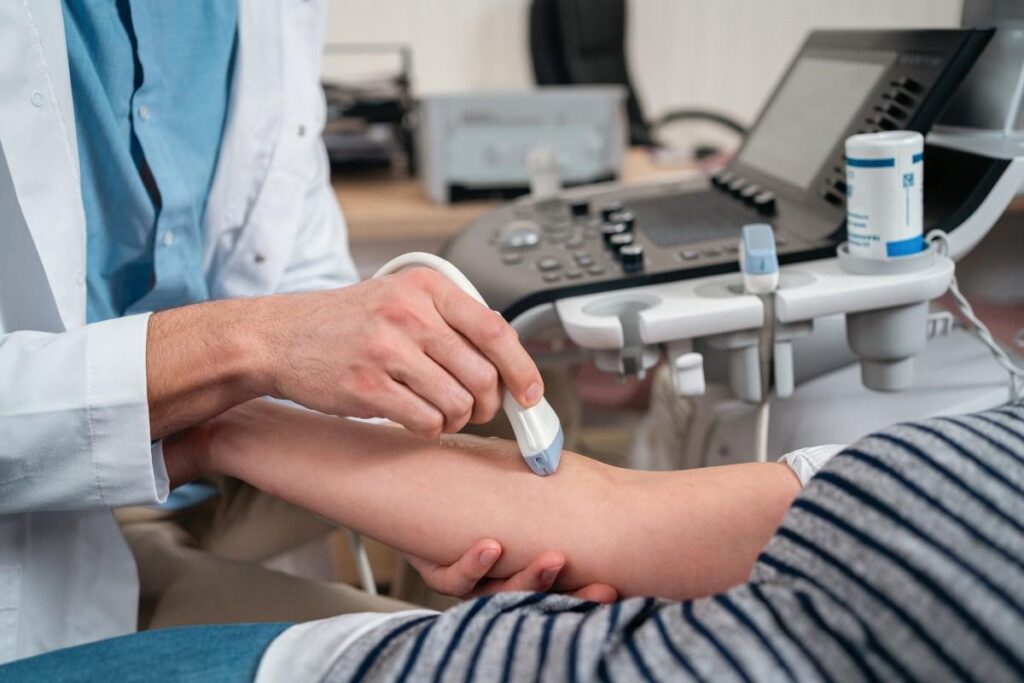
Vascular ultrasound uses sound waves to create images, using a process known as sonography. A small probe placed on the skin sends high-frequency sound waves into the body, and the sound waves bounce back to the probe. These sound waves are used to create images, captured in real time, showing structure and movement within the body. Ultrasound does not use radiation and can reveal information that can’t be captured on an x-ray. Using a vascular ultrasound, physicians can see and evaluate not only the structure of the veins and arteries, but also the blood flowing through them.
High Risk Vascular Screening: Who is Considered High Risk for Vascular Disease?
As mentioned, vascular disease often has no symptoms in the early stages. It can affect anyone, but some people are at higher risk than others. For those people, vascular screenings are particularly important. Risk factors for vascular disease include:
- Age: Men are at higher risk after age 55, and women’s risk increases at 65. This is likely connected to decreasing hormone levels. Hormonal changes are especially significant in post-menopausal women, whose risk of arterial disease, peripheral artery disease (PAD), and deep vein thrombosis increases.
- Family History: Having relatives with vascular disease is a good reason to get screened earlier, especially if those relatives developed issues before age 50.
- Smoking: Smoking is a habit that’s bad for the entire body, not just the lungs. In the vascular system, smoking causes damage to the blood vessel walls, hastening plaque buildup.
- Underlying Health Issues: Certain conditions, including diabetes, high blood pressure, and high cholesterol, can raise a person’s risk of vascular disease.
- Existing Symptoms of Vascular Disease: Leg pain while walking, or numbness or swelling in the extremities can be signs of vascular disease. Having a vascular ultrasound screening can help rule out major issues like PAD or blood clots.
Common Types of Vascular Ultrasound Exams
The vascular system is complex, so vascular screenings must assess different areas.
- A carotid ultrasound measures the blood flow in the carotid arteries, on either side of the neck, checking for blockages.
- An aortic ultrasound looks for weaknesses in the largest artery in the body, the aorta, which carries blood from the heart and lungs to the tissues.
- A renal artery ultrasound is used to look for blockages in the arteries that supply blood to the kidneys. It is sometimes used to check a patient after surgery or monitor existing renal artery disease.
- Mesenteric arterial duplex scans check the arteries leading to the liver, spleen, stomach, intestines, and inside the kidney and intestines. This type of scan checks for narrowing or blockages that can reduce blood flow to the intestine or cause abdominal pain.
- A Doppler ultrasound may be used on the lower extremities if there are signs of decreased blood flow in the legs, arms, or neck. This test can also help diagnose peripheral artery disease.
- For venous insufficiency, ultrasound is the primary diagnostic tool. Doppler ultrasound can be used to determine the presence and duration of reflux in a damaged blood vessel.
Why Early Vascular Screening Matters
Screening for vascular disease helps to catch problems with the vascular system before complications arise. This can prevent life-threatening events like strokes and heart attacks, and detecting problems early also helps improve treatment outcomes. Patients who know they have vascular issues can address them through lifestyle modifications, and doctors can design minimally invasive treatment plans, rather than waiting and risking emergency surgery.
FAQs
- What kind of preparation is necessary before a vascular ultrasound?
- There is nothing a patient needs to do to prepare for a vascular ultrasound, but your doctor may advise you to wear loose fitting clothing.
- Is a vascular ultrasound painful?
- No, vascular ultrasounds are minimally invasive and not painful.
- How long does a vascular ultrasound take?
- The length of the appointment depends on various factors, including the type of ultrasound, but most ultrasounds take 30 to 90 minutes.
For Vascular Screenings and Treatments, Contact ReVaMP Heart and Vascular Institute
When you have questions or need cardiovascular care, trust ReVaMP Heart & Vascular Institute, a practice that has always been on the cutting edge of vascular care. Our dedicated physicians specialize in treating a wide range of cardiovascular conditions, with leading-edge technologies, innovative procedures, and a patient-centered approach. Since 2021, we have been serving patients within the Philadelphia and Southern NJ regions, treating a wide range of cardiovascular conditions, with a focus on preventative and minimally invasive care. We provide coronary, structural, peripheral arterial, and cardiac interventions, in order to enhance our patients’ quality of life and renew their health and well-being. Using a tailored approach, we take the time to understand each patient, in order to craft a treatment plan that meets the patient’s unique needs. For more information about our modern, patient-focused cardiovascular care, contact us through our website.
Understanding Triglyceride-Rich Lipoproteins and Vascular Risk
For many years, the focus for reducing vascular risk has been on cholesterol. It…

Innovations in Mobile Health Apps for Vascular Patient Monitoring
The leading cause of death, worldwide, is cardiovascular disease. In modern…